

More Than Two Decades of UNESCO Internship and Training Programmes for Basque Youth
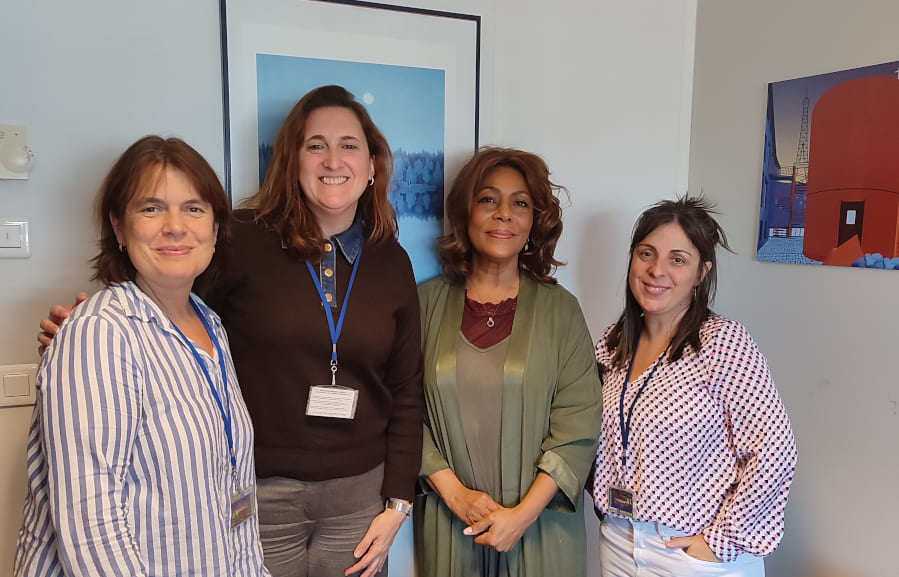
Image: The UN Etxea team together with Jennifer Blinker, UNESCO Human Resources and Partnerships Officer. Paris, November 2026.
For almost three decades, UN Etxea – Basque Country Association for UNESCO has promoted international internship and training programmes that bring young people from the Basque Country closer to the work of UNESCO, offering a unique opportunity to gain first-hand experience of an organization that plays a leading role in fields such as education, culture, science, sustainability and human rights.
The programme, known as Basque Volunteers Programme, began in 1997 as the result of a pioneering agreement between UNESCO and the Basque Government, facilitated by UN Etxea and made possible through the leadership of Federico Mayor Zaragoza, Director-General of UNESCO, and José Antonio Ardanza, Lehendakari (President) of the Basque Government. In addition to opening the doors of the organization to young Basque professionals, the programme became UNESCO’s first paid internship initiative.
Over the years, hundreds of young people have gained international training experiences linked to the United Nations system, strengthening their professional skills and acquiring a global perspective on the challenges facing our societies.
This long-standing collaboration was also the subject of discussion during a meeting held last week in Paris with Jennifer Blinker, UNESCO Human Resources and Partnerships Officer. Since the launch of the internship and training programme, Jennifer Blinker has been a key contact person for UN Etxea, supporting and facilitating the development of this initiative from UNESCO Headquarters in Paris. The meeting provided an opportunity to review the achievements of more than two decades of collaboration and to explore new opportunities for further strengthening cooperation between the Basque Country and UNESCO in support of the training and international projection of Basque youth.
Among the most significant initiatives are the UN internships / Basque Volunteers Programme, promoted by the Basque Government through eLankidetza – Basque Agency for Cooperation and Solidarity, the Directorate of Natural Heritage and Climate Change Adaptation, and the Directorate of Human Rights and Victim Support, as well as the BBK-UNESCO Internationalisation internships.
Thanks to these programmes, managed by UN Etxea since 1997, a total of 240 young people from the Basque Country have had the opportunity to acquire international professional experience through training and internship programmes within different organizations of the United Nations system.
Participants have carried out placements both at UNESCO Headquarters in Paris and in UNESCO field offices in different countries, as well as at the Office of the United Nations High Commissioner for Human Rights (OHCHR). These experiences have enabled them to contribute directly to projects related to education, culture, science, communication and information, as well as the promotion and protection of human rights at the international level.
Beyond the individual experience of each participant, these programmes have helped strengthen the links between the Basque Country, UNESCO and the OHCHR, encouraging the participation of new generations in international spaces for knowledge, dialogue and cooperation.
UNESCO itself has recognised the pioneering nature of these internships and their contribution to the training and internationalisation of Basque youth, highlighting them as an example of sustained cooperation between the Basque Country and the United Nations system.
In line with this trajectory, next year UN Etxea will celebrate three decades of commitment to the internationalisation of young talent. Throughout this journey, the organization has worked to bring new generations closer to the work of the United Nations and UNESCO, understanding this experience as a key tool for fostering global citizenship committed to the values of peace, human rights, cultural diversity, sustainability, and the construction of more just, inclusive, diverse and democratic societies.